

 9am – 5pm Eastern, Monday – Friday
 133 N Dupont Blvd Ste 103, Smyrna, DE 19977
 Sale Tax Free Shopping!
The Rise of the Rugged AI Workstation: Do You Need an NPU in the Field?
27th Mar 2026
Field operations generate enormous amounts of information. As a result, artificial intelligence is emerging as a tool that enables rugged systems to analyze data, interpret results, and support real-time decision-making. However, that capability only works when systems process information quickly and avoid bottlenecks.
In many situations, a rugged AI workstation can benefit from specialized hardware, such as an NPU, to accelerate AI processing. In other situations, traditional processors remain sufficient.
Because delays and slowdowns can affect critical operations, it pays to understand what an NPU is and whether your field systems can benefit from one.
How Growing AI Workloads Led to the Neural Processing Unit
Massive data sets often feed rugged computer systems that identify patterns and produce results. This information can range from body camera footage and thermal imaging to sensor readings and equipment diagnostics collected during field operations.
Once collected, artificial intelligence software analyzes that information to detect anomalous patterns and generate useful results.
Traditional Processors Could Handle Early AI Workloads
For many years, general-purpose processors handled those workloads. CPUs managed system operations, while GPUs improved performance by running many calculations simultaneously.
As artificial intelligence moved into everyday computing, the volume of those workloads skyrocketed. Laptops, tablets, and rugged systems now run software that analyzes data in real time.
In demanding environments, those calculations can strain traditional processors. Systems may process continuous data streams while operating with limited connectivity.
Hardware designers responded to these increasing demands by developing hardware optimized for neural network calculations. The result was the neural processing unit (NPU), a specialized chip designed to accelerate artificial intelligence and machine learning workloads locally on the rugged device instead of in the cloud.
Unlike traditional processors, NPUs accelerate the calculations used when AI systems analyze new data. This specialization allows AI workloads to run faster and more efficiently. Because NPUs focus on neural network processing, they can also complete many AI tasks with lower power consumption.
NPU vs. GPU in Rugged AI Systems
Graphics processing units have supported artificial intelligence workloads for nearly two decades. GPUs were originally designed for graphics rendering, but their ability to run many calculations at the same time made them useful for machine learning and deep learning tasks.
In many AI environments, GPUs still play an important role. For example, they're commonly used to train large AI models, a process that requires enormous data sets and extensive parallel computation. Data centers and research systems often rely on GPUs to handle these demanding workloads.
However, the AI tasks performed in rugged systems are often different. Field computers usually analyze new data using models that have already been trained.
NPUs were designed specifically for this type of workload. Unlike GPUs, which support many types of computing tasks, NPUs focus on the calculations used in neural networks.
Additionally, NPUs excel at performing the repetitive matrix-matrix multiplications used in AI inference. Because these operations occur constantly when AI models analyze new data, specialized hardware can process them more efficiently than general-purpose processors.
In rugged environments, this capability allows systems to analyze data locally, reduce delays, and operate more efficiently on limited power.
This specialization allows them to perform AI analysis with less time between action and response (latency) and better power efficiency.
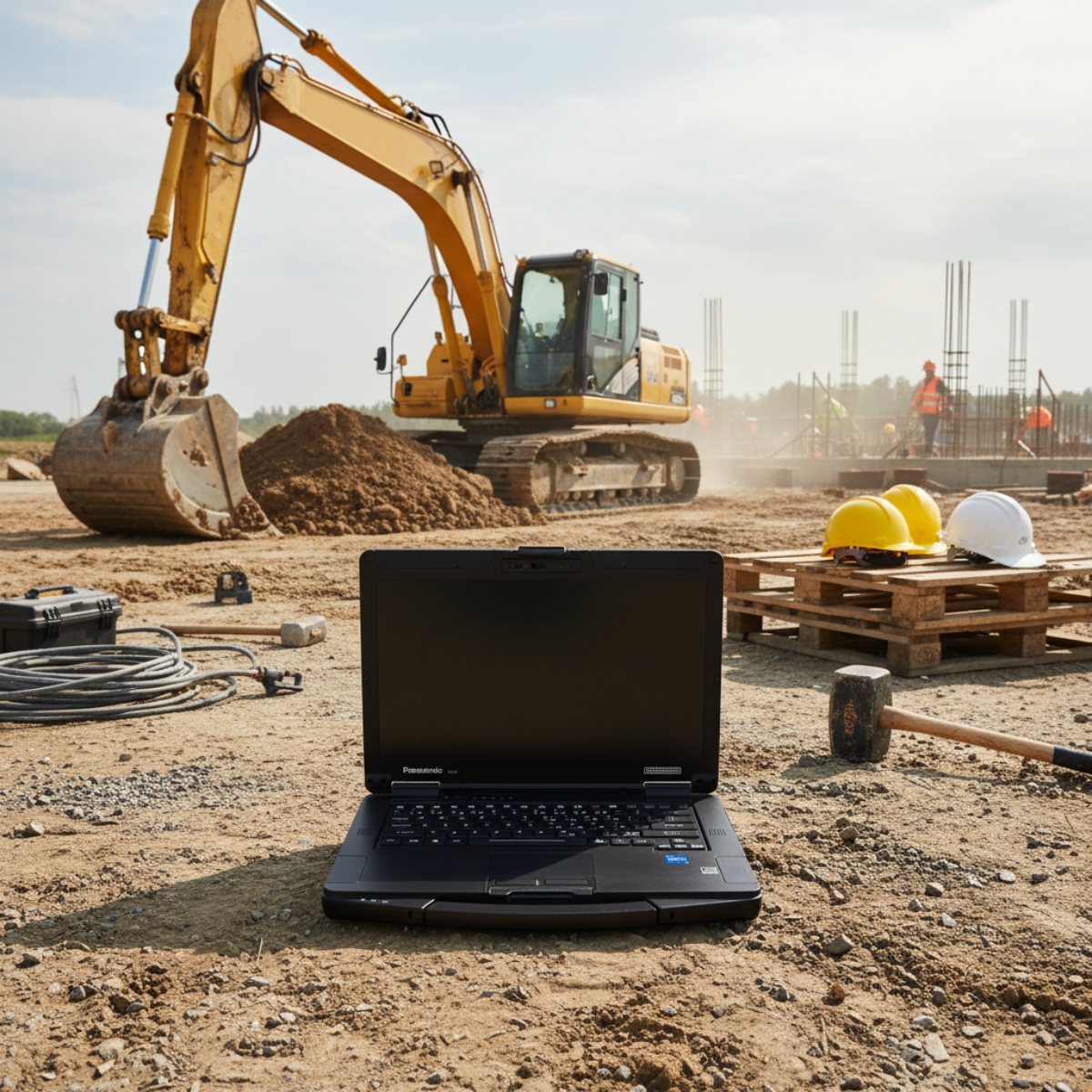
For rugged computers operating in remote environments, that efficiency can make a huge difference. Systems may need to analyze images, sensor readings, or diagnostics while running on battery power and limited connectivity.
In these situations, the NPU often handles AI calculations while the CPU and GPU manage other system tasks. This task division allows rugged AI workstations to run artificial intelligence workloads more efficiently without overwhelming the entire system.
These processing units are especially useful in applications where high computational throughput is critical.
As you can tell by now, CPUs, GPUs, and NPUs handle artificial intelligence workloads differently. The next step is identifying where those differences matter in field operations.
When Field Systems Benefit Most from an NPU
Artificial intelligence workloads in rugged field systems often require fast analysis, local processing, and efficient power use. In the following scenarios, NPU acceleration can help field devices process data more quickly and operate more effectively in demanding environments.

Time-Sensitive Analysis in the Field
Artificial intelligence systems running on rugged computers often operate in environments where decisions must happen quickly. These systems may analyze images, sensor data, or equipment diagnostics while technicians work in the field.
In these situations, delays in processing can slow inspections, maintenance activities, or emergency responses. NPUs accelerate AI inference calculations, enabling rugged systems to process information faster and deliver results when remote teams need them.
Real-Time Image and Video Analysis
Many field operations rely on visual data collected during inspections, emergency response, and infrastructure monitoring. Artificial intelligence systems can examine these images quickly when an NPU accelerates the underlying calculations.
Examples include:
- Public safety review of body camera footage or surveillance video during incidents
- Inspection photos are used to evaluate infrastructure such as bridges, pipelines, or power lines
- AI-assisted detection of objects, damage, or other anomalies in visual data
- AI-powered video features such as noise reduction, image stabilization, or subject tracking during remote inspections and live incident reporting.
When these workloads run on systems equipped with an NPU, image analysis and video processing can run faster and consume less power.
Limited Connectivity and Offline Capability Environments
Other situations where an NPU becomes valuable include offline or limited-connectivity environments. AI models may need to run directly on the rugged computer when systems cannot reliably send data for analysis to centralized servers or cloud computing environments.
Edge Computing enables on-device processing by analyzing information locally rather than sending every data stream to the cloud. NPUs help make this approach practical by accelerating AI inference directly on the device.
Local processing reduces latency, lowers bandwidth usage, and enables rugged systems to operate in remote environments. These deployments often include smart cameras and connected sensors that must analyze data quickly on-site.
In battery-powered systems, NPUs can also run AI workloads more efficiently than GPUs, often operating at far lower power levels.
Continuous Sensor Monitoring
Artificial intelligence systems often analyze large streams of incoming data. Rugged computers frequently collect this information from sensors connected to industrial equipment, transportation systems, or environmental monitoring tools.
AI software can evaluate these readings to detect anomalous patterns or early warning signs of equipment failure. In predictive maintenance environments, systems continuously monitor equipment conditions to identify problems before they lead to downtime.
When these intelligent models run directly on the device, NPUs accelerate the calculations used for that analysis at the edge. This capability allows rugged systems to process sensor data in real time without slowing other operations.
 When Traditional Processors Are Still Enough
Not every rugged AI workstation requires specialized acceleration hardware. In many field applications, traditional central processing units and graphics processing units can handle the workload effectively.
The need for a neural processing unit often depends on how frequently artificial intelligence models run and where the analysis takes place.
Basic Data Collection and Logging
Some rugged computers simply collect and store information from sensors or inspection tools. These systems transmit data to centralized servers for later analysis. In these scenarios, CPUs and GPUs usually provide sufficient processing power.
Cloud-Based AI Processing
Some organizations run artificial intelligence models on cloud platforms or centralized servers. The rugged computer collects data and transmits it to remote infrastructure for processing. Because intensive calculations are performed off the device, a local NPU may not provide a significant advantage.
Low-Frequency Analysis Tasks
Some systems run artificial intelligence models only occasionally rather than continuously. For example, a technician may analyze certain images or diagnostic data after an inspection is complete.
Smaller AI workloads can often run on traditional processors without specialized acceleration hardware.
Systems Focused on Communication and Monitoring
Certain rugged devices primarily support mapping, messaging, and system monitoring tasks. These applications rarely require complex neural network calculations. CPUs manage system operations, while GPUs assist with parallel processing.
General Productivity and Non-AI Workloads
NPUs provide little benefit for general computing tasks that do not rely on AI acceleration. Activities such as web browsing, document editing, or email management rely primarily on traditional processors.
Tasks that require significant computational power, such as large spreadsheet calculations or other high-performance computing workloads, are better handled by CPUs than by NPUs.
Choosing the Right Rugged AI Workstation for Field Operations
If you’re unsure whether your field systems would benefit from an NPU or traditional processing hardware, Bob Johnson’s team of rugged computer specialists can help evaluate and determine your workload requirements.
With decades of experience working with rugged laptops and tablets used in demanding environments, our team can help you identify configurations that match your operational needs. We’ll sort out the “nice to haves” from the “need to haves” quickly, in other words.
You can review our current rugged laptop inventory to compare available configurations and find systems suited for AI-enabled field work.